

To reach peak performance in any sport, including cycling, a significant amount of training is required. Top athletes employ a coach, or team of coaches to help them maximise their potential. In recent years, there has been an increasing trend with amateur athletes utilising coaches to improve their performance, including helping them prepare for events such as L’Etape du Tour.
Typically, this will involve amateur athletes paying a coach a monthly fee for specific sessions. The plan you sign up to will depend on what type of engagement you have with the coach. A quick Google search will find a vast range of coaches offering services, with some costing as much as $599USD per month.
Coaching is big business and having access to a level of coaching where your performance is analysed and training plans adjusted has meant that you need deep pockets. This has created a clear divide between elite-level preparation and the training options available to most amateur athletes. However, with the evolution of artificial intelligence (AI), the landscape has started to shift.
Vekta have identified that AI can be utilised to provide an exceptional level of coaching at an affordable price, meaning that access to good quality training is now not limited to those who have the biggest bank balance. Vekta have developed what they call “Adaptive Training Plans”, which they explain as “a new way to prepare for endurance events, combining the world’s best coaches and AI to deliver personalised, adaptive training plans.”
Adaptative Training Plan explained
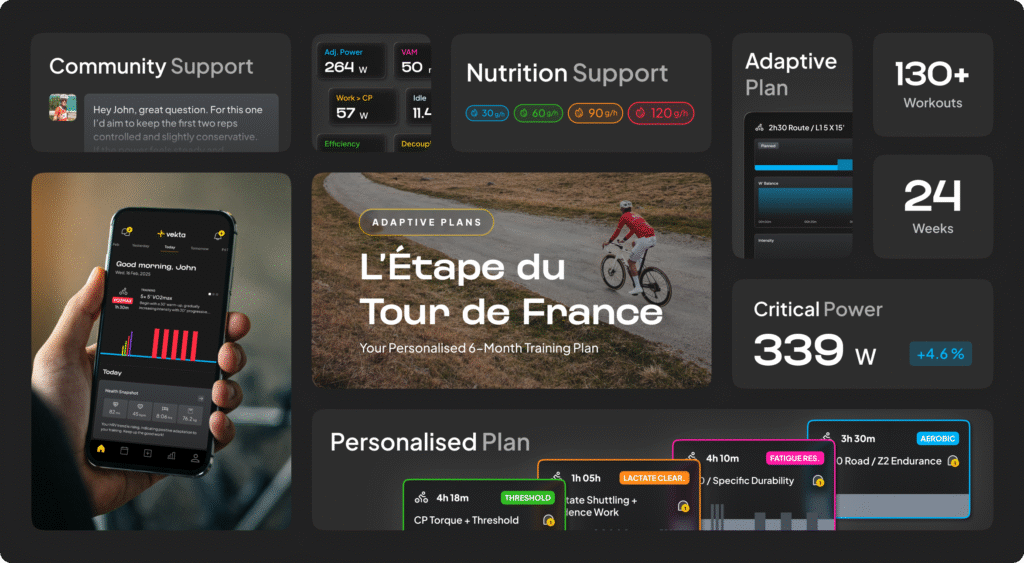
An Adaptive Training Plan is a complete, coach-designed training structure built for the demands of a specific event, updating and changing as your fitness and performance evolves. The plan is formed by inputting key data such as the number of hours you can train, and it evolves as your fitness progresses. Key points to note:
- Each plan starts as a comprehensive framework created by an expert coach to meet the unique requirements of your chosen event.
- The plan is tailored to your life, your schedule, fitness level and personal preferences dictate exactly how the plan unfolds.
- By tracking your progress, the plan auto-adjusts to make sure every workout is optimized for where you are today.
Origins of Adaptative Training
In a recent interview with Dominic Valerio, Vekta’s Communication Director, he explained that: “the idea for Adaptive Plans came from CEO, Paul-Antoine.
He saw a clear gap in how traditional training plans are delivered: they are static, generic, and quickly fall out of sync when an athlete’s fitness or schedule changes. At the same time, as more WorldTour teams and elite coaches adopted Vekta, he saw the level of expertise and rigour that sat behind how the best coaches build and manage preparation. However, this level of coaching remained inaccessible to most athletes.
Adaptive Plans started as the idea of closing that gap by combining world-class coaching expertise with Vekta’s original adaptive foundations, and delivering that level of coaching beyond the confines of traditional 1:1 models.”
What sets Adaptive Training apart?
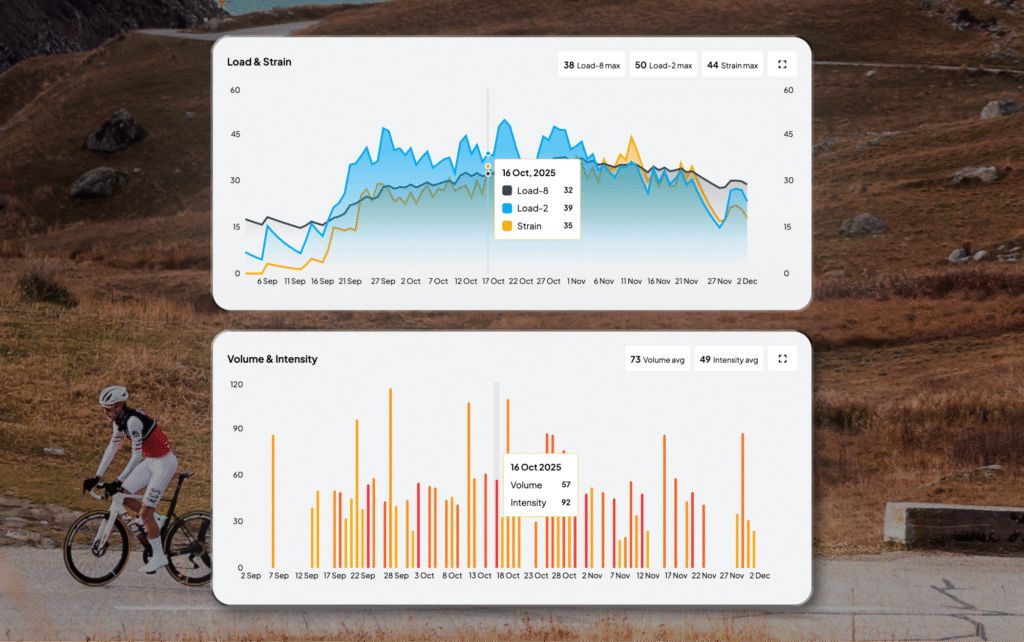
Anyone can purchase a training plan and follow it. However, the problem with these plans is that they are static by design. They are written and assume a smooth, linear progression. Sadly, this doesn’t reflect the realities of everyday life, as people’s schedules change, the plan doesn’t. The result is that the individual is left to interpret what to do and amend it themselves, and hope it still fits.
Another challenge is the quality of the plan. While top-tier coaching yields incredible results through event-specific training, it is expensive, making it a luxury few can afford. This creates a significant divide between elite preparation and the generic, one-size-fits-all plans.
This is where Adaptive Plans have been developed and are designed to bridge that gap by combining world-class, event-specific coaching structures with a system that personalises those plans and continuously adjusts them. This ensures the preparation remains aligned as training, fitness, and availability change, all done through utilising new modern technology and at an affordable price. This is something which was impossible only a few years ago.
Development of Adaptive Plans
Vekta explained that “Adaptive Plans were not built as a standalone product from scratch. They were developed over several months. Adaptive Plans evolved through iteration, informed by how coaches and athletes actually train, adapt, and respond over long preparations.”
Challenges in the development included balancing dynamic adaptation with coaching integrity. “While automating session changes based on data was straightforward, the real difficulty was ensuring those adjustments didn’t compromise the coach’s original progression or physiological intent,” Domonic noted.
Another challenge included scalability. The system had to be robust enough to accommodate vast differences in athlete fitness and volume without diluting the core event-specific preparation. As Dominic noted, “adaptation had to make the training appropriate to the individual without fragmenting the plan into something different for each athlete.”
L’Étape du Tour de France Adaptive Plan
The biggest amateur cycling event in the world is the legendary L’Étape du Tour de France. The event sees 16,000 amateur cyclists race a stage of the Tour de France. It’s a tough event, in part due to the sheer volume of people participating, but also because the route is hosted on one of the toughest stages of the Tour de France, making pre-training essential.
This is where Vekta have created the L’Étape du Tour de France Adaptive Plan. This is a 24-week plan that is designed specifically for the demands of the event. The structure is built around long sustained climbs, cumulative fatigue across a full day, and the pacing demands of extended ascents. While the overall structure remains fixed, the plan is personalised and continuously adjusted based on your training data, availability, and progression as race day approaches.
The plan, which is priced at €199.99 and is a one-off purchase, is designed by Loïc Ruffaut, who has both raced and coached athletes for L’Étape du Tour de France. His experience includes a second-place finish at the 2022 edition on Alpe d’Huez and coaching athletes to top-10 finishes at the event. His direct experience informs how the training is structured and aligned with the realities of race day. Once you purchase this, you will have all the training sessions, sent on a weekly basis for you to keep and redo, even after the event.

In addition to the core training plan, athletes benefit from structured weekly guidance, tailored race-day pacing strategies, and ongoing nutrition support throughout their preparation. The program also offers access to an exclusive L’Étape du Tour community and expert-led webinars.
About the sessions and how they work
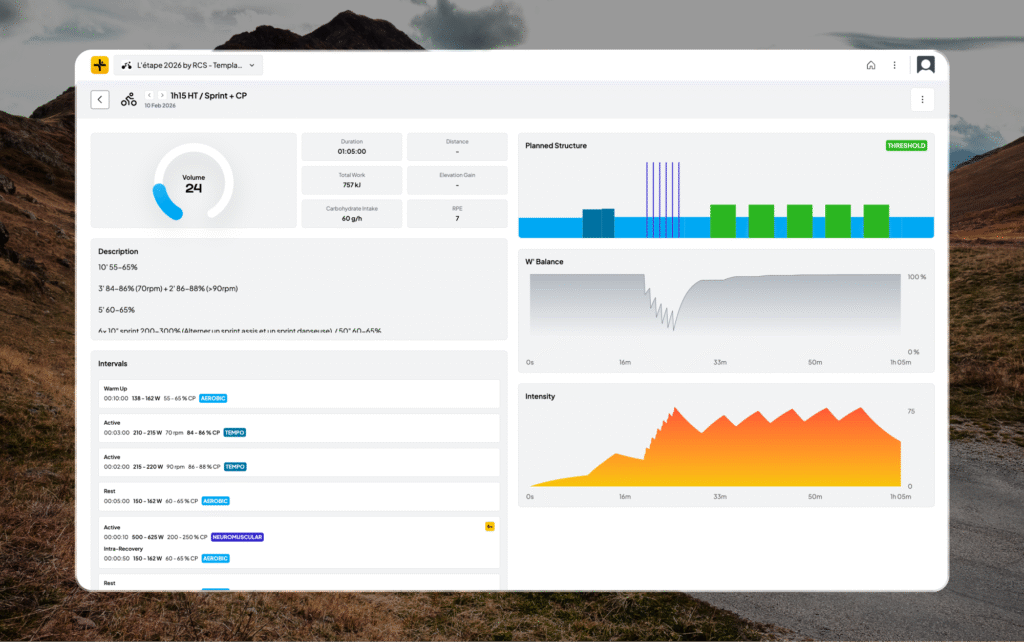
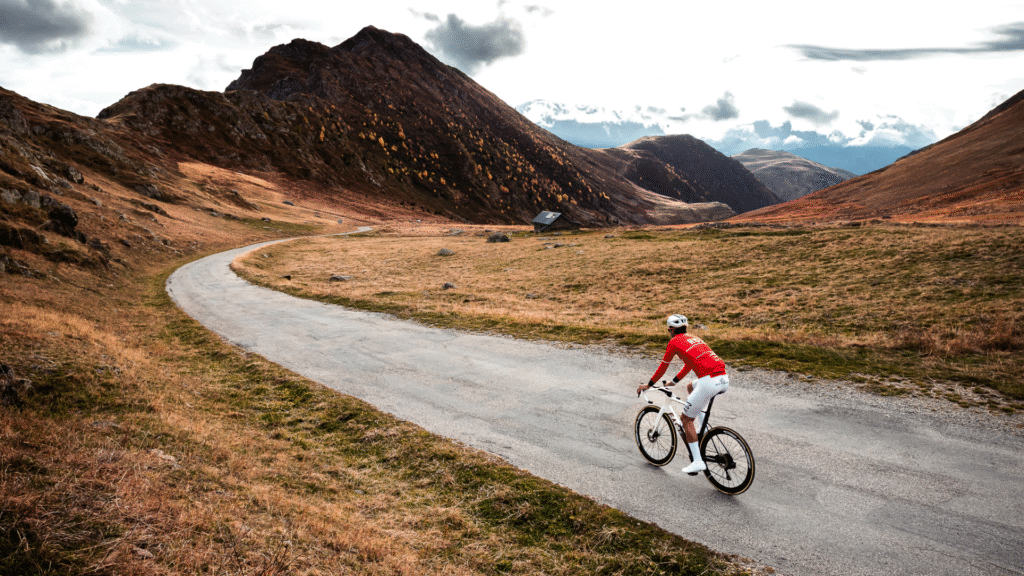
The sessions are built to reflect the specific physiological and pacing demands of the event. This includes sustained efforts around climbing intensity, the ability to repeat long efforts under fatigue, and controlled pacing rather than purely maximal efforts. Session intensity and workload adapt automatically as the athlete’s fitness changes, but the role of each session within the preparation remains consistent.
Once you have purchased the plan (click here) and set up your Vekta account, the sessions will be uploaded into your training calendar.
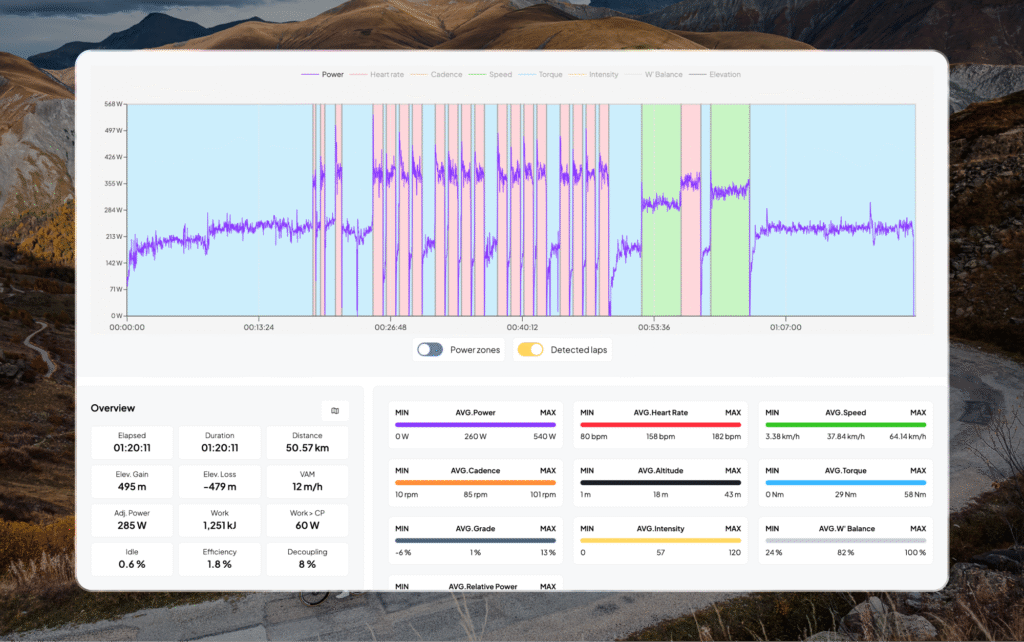
If you partake in indoor training have a Zwift account and have previously connected Vekta to Zwift, the sessions will appear in the “Training” area under the “Vekta” folder.
Mountain Massif and L’Étape du Tour de France Adaptive Plan
Having previously ridden the L’Étape du Tour de France in 2024 and lived to tell the story, I am delighted to once again be involved with this iconic event. Over the next four weeks Mountain Massif, in collaboration with Vekta, will be showcasing four of the training sessions from the Adaptative Training plan hosted on Zwift.
If you are interested in sampling these sessions, please click the links below:
INSERT LINKS
Summary
In summary, Vekta’s Adaptive Training Plans revolutionizes the coaching landscape by merging expert guidance with advanced AI technology, making high-quality, personalized training accessible to all athletes, regardless of their budget. This innovative approach not only optimizes performance but also adapts to the unique challenges of each athlete, ensuring they are well-prepared for their chosen events. With specific plans like L’Étape du Tour de France, Vekta are enabling all athletes with the opportunity to reach their peak performance. Furthermore, Vekta sees this as the new frontier, with Dominic noting that they are “exploring the integration of AI agents that allow athletes to interact more directly with their training, data and progress, including the possibility of engaging with AI clones of the coaches who designed the plans.” It’s incredible to think that all of this was unimaginable only a few years ago.